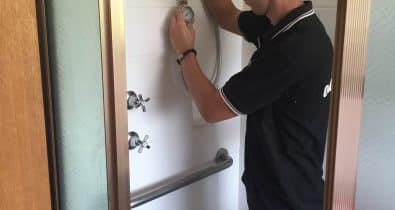
By Tom Martin, Water Tight Canberra
If you are heading away, switching off the hot water can seem like an obvious way to save electricity or gas. Whether it is a good idea depends on the system you have and how long the house will be empty.
For a conventional electric or gas storage heater, my recommendation is to switch it off only when you will be away for a month or longer. For shorter trips, I would generally leave it operating. Use the shutdown steps below, together with the instructions for your particular model.
Heat pumps, continuous-flow heaters and solar systems need their own approach. In Canberra, protecting the system through cold weather is part of the decision.
Our starting recommendations
Conventional electric or gas storage
For a month away or longer, switch it off using the steps below and your model’s shutdown instructions.
Heat pump
Keep the power on unless you have read and understood the specific shutdown instructions. Use holiday mode as directed, where fitted.
⚠️ Risk: Isolating power can deactivate anti-frost protection. Water-filled parts can freeze and split, and resulting damage may not be covered by the manufacturer’s warranty.
Gas continuous flow
Leave the electrical supply on. Normal standby demand is small, and frost protection may need power.
⚠️ Risk: Isolating power can deactivate anti-frost protection. Internal parts can freeze and split, and resulting damage may not be covered by the manufacturer’s warranty.
Solar hot water
Check the complete system’s instructions before switching off the booster, pump or controller.
⚠️ Risk: Incorrect shutdown can disable frost protection and damage collectors, pipework and connected components. Restarting without water can damage pumps. Resulting damage may not be covered by the manufacturer’s warranty.
Start with the model number
Before touching any switches, find the brand and model on the heater’s identification label. Take a photo and find the matching owner’s manual on the manufacturer’s website.
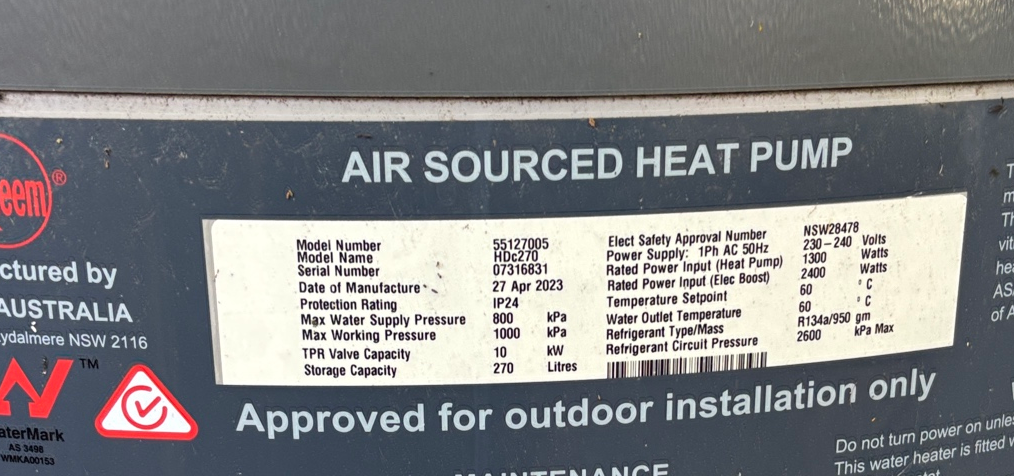
Use these manufacturer pages to find the manual for your model:
- Rheem owner’s guide search: enter your model number in the “By Name or Model” field.
- Rinnai product support and manuals: search by model number or product name. Select “All” or “Discontinued” if you have an older unit.
Look for sections called “Going on holidays”, “Vacation mode”, “Freeze protection” and “Turning the water heater off and on”. Read the restart instructions before leaving, too. Knowing the brand alone is not enough to choose the right procedure.
Conventional storage systems
A storage heater keeps a tank of water hot and replaces heat lost while it sits there. Switching it off for a month or more avoids using electricity or gas to keep reheating water while the home is empty.
Conventional electric storage
On most installations, there is a dedicated hot-water isolating switch on the wall near the appliance. Turn the power off at that switch. If there is no nearby switch, as can be the case in older homes, use the correctly labelled hot-water circuit breaker or isolating switch in your switchboard.
Use the normal external controls and leave electrical covers in place. Some twin-element tanks have separate supplies for normal heating and boosting; both need to be switched off. If you cannot confidently identify the hot-water switch or circuits, ask us to show you.
First, read the unused-tank flushing precautions in the restart section below. Before restoring power, restore the water supply and run a hot tap until the flow is smooth and free of air. If using a mixer, turn it fully to hot. This checks that the tank has refilled if it accidentally drained while you were away. The tank must be full before you switch the heating back on.
Conventional gas storage
Turn the gas control to OFF, then close the gas isolation valve supplying the heater, following the shutdown instructions on the unit. Turn the gas control off before isolating the gas supply.
The lighting and shutdown instructions are commonly printed on the back of the front access panel or on a label beside the controls. When you return, confirm the tank is full, then restore the gas supply and relight the system in the order shown on that label.
A holiday shutdown does not normally require draining a conventional storage tank. If your model has additional shutdown or frost precautions, follow them. Allow time for a full reheat when you return.
Heat pumps
Keep the electrical supply on unless you have read and understood the shutdown instructions for your particular heat pump.
Some heat pumps rely on electricity for frost protection. Cutting the supply at the wall or switchboard can disable that protection, even though nobody needs a shower while the house is empty.
If your system has a holiday or vacation mode, learn how to use it. Check what the mode does, whether you need to enter return dates and how to resume normal heating. Some settings resume automatically; others need to be ended manually.
For example, the Rheem Ambiheat HDc270 has a Vacation Mode that stops normal heating while allowing frost protection to operate when needed. Its instructions require electricity to remain available where freezing conditions are possible.
Check your model’s water-supply requirements as well. If a heat pump remains powered, automatic functions may still operate, so its storage tank must remain full. Confirm the permitted arrangement before turning off the mains water.
Continuous flow systems
For a standard domestic gas continuous-flow system, our usual recommendation is to leave the electrical supply on.
These units normally heat water as it flows through them. When the hot taps are closed, the burner stops; there is no stored tank being kept hot.
Normal standby electricity use can be very small. As an example, Rheem lists less than one watt for its B28 models with the burner and frost protection inactive. Frost protection uses additional power when it runs.
Keeping the power connected allows the unit’s electrical frost protection to work when needed. If you have a solar-boosted unit, a circulation system or another specialised arrangement, check the instructions for the complete installation.
Solar hot water
Solar hot water may have separate controls for its booster and solar circulation equipment. Check the complete system’s holiday instructions before switching anything off.
On some systems, the booster can be switched off for an absence while the solar controller needs power for frost protection. Longer absences can also have additional requirements.
The tank and pump circuit must be filled as instructed before restarting a system that has been drained; running a pump without water can damage it. Arrange any work involving roof access or draining the collector circuit with your plumber.
If you are also turning off the water
Sort out the hot-water requirements first. Once you have confirmed the installation can be left with its water supply isolated, our usual advice for an unattended home is to turn off the main water isolator.
We also recommend leaving an obvious outdoor cold tap fully open on the house side of that isolator. A valve that does not seal completely can gradually let pressure build again; the open tap gives that water an outlet. Remove any hose or timer and make sure water can drain safely away from the building.
Check that the flow slows and stops. If substantial water keeps flowing, the main isolator may not be shutting off properly. Have it checked before leaving.
On a standard standalone gas continuous-flow heater, isolating the water supply does not create a demand for hot-water heating: the burner responds to flow through the unit. Electrical frost protection may still need power. Heat-pump and solar arrangements need their own manual checked before the water is isolated.
Our guide to finding your water isolation tap can help you locate the correct valve.
Restarting the system when you get home
Give yourself time to refill, check and fully reheat the system before you need a shower. Read any instructions for a heater that has been unused for several weeks before restarting it.
Check the precautions for an unused storage tank
Follow your model’s instructions for how long to run the tap; this may be several minutes, even after any air has cleared. Do this before using a dishwasher, washing machine or other hot-water-connected appliance, and do not use an appliance for the initial flushing.
Restore the water and clear the air
Keep the heating off while you restore the water supply. Open the main isolator and any water valve at the heater that you closed before leaving. Close the outdoor tap once the supply has been restored and checked.
Open a hot tap and run it until the air stops spluttering and you have a smooth, steady flow. If using a mixer, turn it fully to hot. Follow the system’s filling instructions and clear air from any other hot taps as directed. This refills the tank and clears air if water has escaped while you were away. Close the taps once the flow is steady and any required flushing is complete.
The storage tank must be full before you turn its heating back on. This applies to electric storage, gas storage and heat-pump tanks. If you cannot establish a steady flow or are unsure the tank is full, leave the heating off and have it checked.
Restart the heating
- Electric storage: once the tank is full, turn the power back on at the same wall switch, isolator or circuit breaker you used to switch it off.
- Gas storage: restore the gas supply and relight the heater by following the instructions on the appliance, commonly on the back of the front access panel. Follow the stated sequence and waiting times. Do not attempt to relight it if you smell gas. If it will not light or stay alight, stop and arrange a service.
- Heat pumps and solar systems: end holiday mode or follow the manufacturer’s restart procedure, including the required filling checks for tanks and pumps.
Let the tank fully reheat before use
Allow the whole tank to complete a full reheat before showering or using the stored hot water. Water left standing in a cooled tank can allow Legionella bacteria to grow. Heating it back to the required storage temperature helps control that risk.
Australian Government guidance recommends heating stored water above 60°C for at least 35 minutes after a holiday. Follow your model’s restart or sanitising instructions and allow enough time to achieve the required heating cycle.
Water that feels warm at a tap does not prove the tank has finished reheating; a tempering valve can make tap water cooler than the water stored in the tank.
If your heater uses a controlled-load or off-peak electricity supply, switching it on may not start heating immediately. Power can be limited to scheduled periods, often overnight. Check your supply arrangement and allow time for a full reheat.
Look around the heater and accessible connections as the water is restored and the system returns to service. Unexpected leaks, error messages or failure to heat deserve attention.
A service is a chance to learn how your system works
If you are unsure how to prepare your hot-water system for an absence, book a service and ask us to walk you through it.
Many hot-water systems have a major service due around the five-year mark, alongside more frequent checks or maintenance. Some models need professional servicing sooner, so follow the schedule for your particular unit.
During a hot-water service with Water Tight Canberra, we can check the system’s condition, explain the relevant controls and isolation points, and show you how to prepare it for time away and restart it in line with its instructions.
It is a useful opportunity to get familiar with the equipment, especially if you have moved into a home and do not know when the hot water was last serviced.
Call Water Tight Canberra on 02 6195 9991 to book a hot-water service and advice on your system.